Online stores · Organising delivery
Planning shipping and collection for a Swiss online store
Shipping in an online store is more than a technical setting. It determines the costs customers see at checkout, how quickly orders arrive and how much work is involved in the warehouse. A clear shipping structure makes purchasing understandable and fulfilment predictable.
This article explains how to structure shipping methods, areas, costs and collection for a Swiss shop. It covers organisational and technical questions. Tax, customs and legal matters require advice from your accountant or another qualified professional and are mentioned here only as points to check.
Starting with shipping within Switzerland
For most Swiss shops, planning begins with domestic shipping. The basic questions are: which carrier will you use, what parcel sizes, how quickly and at what cost? These details come from your contracts and processes, not the store platform.
The shop then reflects the arrangements you have made. It is therefore worth working out your shipping rules on paper first: which products travel by which method, what does this cost the customer and what exceptions apply? Only then should you configure the system.
If you already sell, for example by telephone or email, review actual orders from recent months. Which products are often ordered together, how heavy are typical shipments and where do they go? This experience provides a better basis for shipping rules than assumptions. If you are starting out, estimate typical orders based on your range and adjust the rules after the first few weeks.
An overview of a shipping structure
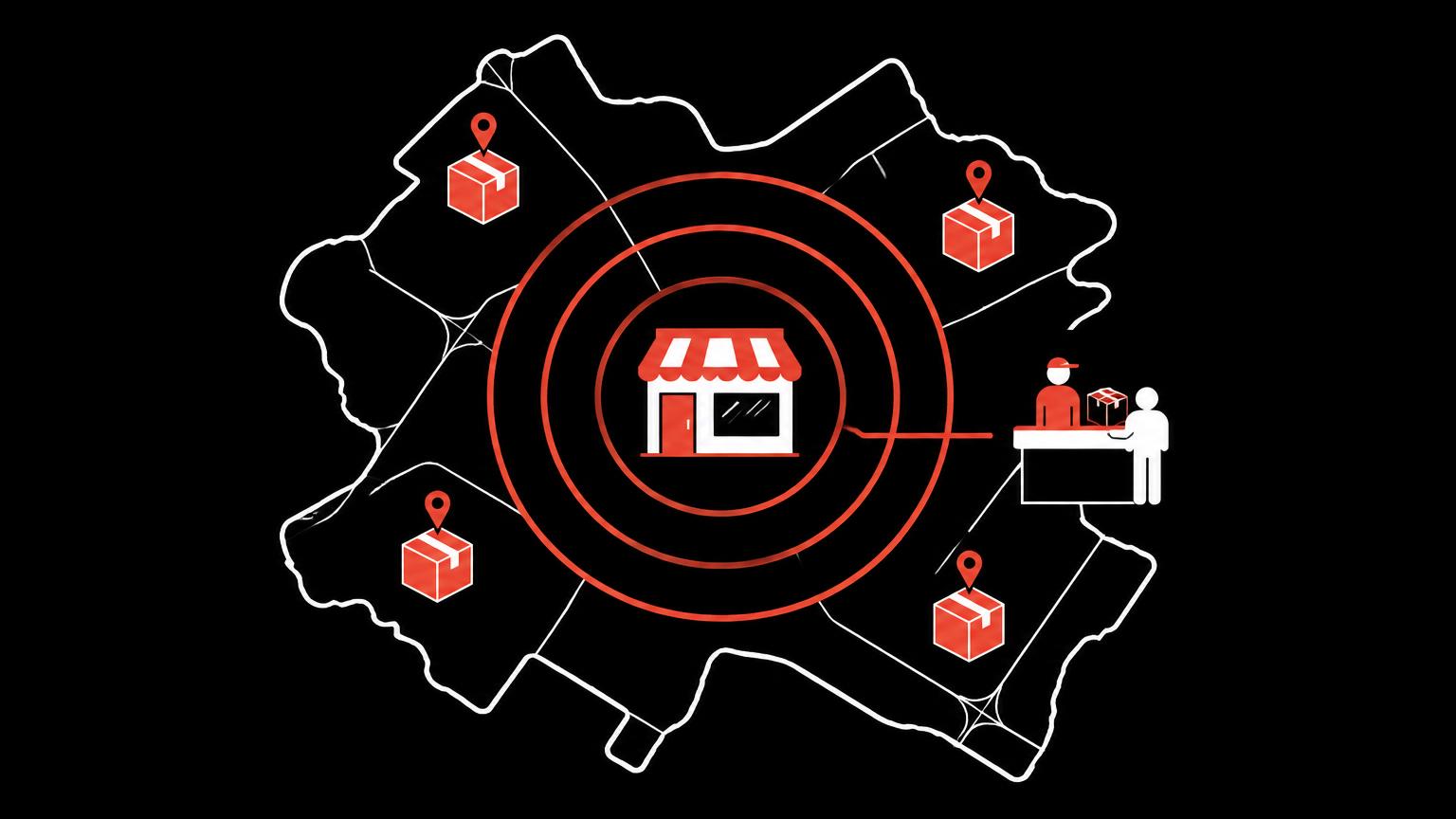
The following graphic shows an abstract shipping structure: a central shop, shipping zones by area and a collection option. It deliberately avoids real locations and illustrates the principle instead.
In WooCommerce, these areas are configured as shipping zones, each with its own shipping methods. Other systems use similar concepts under different names. What matters is that every order can be assigned to exactly one zone.
Shipping zones and costs
A shipping zone groups together areas with the same rules. Many shops need only two zones: Switzerland and Liechtenstein, plus an overseas area if required. More detailed zones are needed if, for example, you deliver personally only in certain regions or do not serve particular areas.
There are three basic pricing models: a flat rate per order, weight-based charges or charges based on order value. A flat rate is easy to understand but may not cover the cost of heavy products. Weight-based charges are more precise but require accurate weight data. You decide which costs to pass on.
Conditional free shipping
Free shipping above a certain order value is common. It can encourage larger orders, but you bear the shipping cost. Calculate in advance whether the threshold suits your margins. Also establish whether it applies before or after discounts and whether it covers all zones.
Weight, order value and product - specific rules
Some products do not fit standard shipping rules: bulky items, fragile goods, chilled products or items that require freight delivery. These need separate rules or a designation that triggers a different shipping method at checkout.
Store platforms handle this differently, for example through shipping profiles, shipping classes or product groups. How precisely rules can be combined depends on the system and sometimes the plan or extensions; check this before implementation. The more exceptions you have, the more important well-maintained product data becomes. The article Preparing product data properly for an online store explains how to record weights and dimensions accurately.
Collection and delivery areas
Collection from a shop or warehouse is an important option for many local businesses. It saves shipping costs, enables personal contact and suits products that are difficult to ship. In the shop, collection appears as a separate shipping method with the address, opening hours and information about when the order will be ready.
Shopify explains the setup under Pickup in store, and WooCommerce under Local Pickup. Agree internally how collection orders are prepared, who notifies customers and how long orders remain reserved.
If you deliver yourself, for example within a certain radius, define the delivery area clearly. Postcodes are usually more practical than distances. Your own delivery service should not be offered at checkout outside that area.
Communicating shipping clearly
Even the best shipping rules are of little use if customers do not understand them. A dedicated shipping information page answers common questions in one place: where you deliver, what it costs, how long it takes, how collection works and how returns are handled. Link to this page in the footer, on product pages and at checkout.
A short note on the product page is enough, for example stating the delivery time and the order value required for free shipping. Shipping costs should already be visible in the basket, or at least possible to estimate. The earlier customers have clarity, the fewer surprises they encounter at checkout.
Post-purchase emails are part of this communication too. An order confirmation, a dispatch confirmation with a tracking number and, for collection, a notification when the order is ready all build trust. Review your system’s templates and adapt the wording to your actual processes, removing generic statements that do not apply.
If you would like to discuss shipping, collection and your shop’s structure, tell us about your processes.
Send a non - binding enquiryPlanning shipping rules with an example
In the following planner, you select an area, order value, weight and collection option. The demo shows a possible rule structure based on these choices. It does not calculate real shipping prices or replace discussions with your carrier.
- One domestic zone
- Flat rate per order possible
- Optional free delivery threshold
Packaging, delivery times and tracking
Packaging affects weight, parcel size and therefore cost. Using a small number of standard boxes makes shipping rules easier to plan. For fragile or sensitive products, test the packaging and shipping method together.
Give realistic delivery times, distinguishing warehouse processing time from transit time. If products are made to order or unavailable from stock, say so on the product page. Including a tracking number in the dispatch confirmation saves many enquiries.
Returns and cross - border shipping
Returns are primarily an organisational matter: under what conditions will you accept goods back, who pays and how are refunds processed? You set these rules, ideally with professional advice. Describe them clearly in the shop and link to them wherever needed.
International shipping involves customs formalities, taxes and potentially restrictions on particular products. Discuss these matters with your accountant, carrier or another qualified professional. Overseas zones and markets can be configured technically; Shopify describes localisation for markets, for example. However, configuring the shop does not replace professional advice.
Comparing shipping models
The following table matches common shipping models to suitable situations and requirements. It helps you choose but does not replace checking the specific system.
| Shipping model | Suitable situation | Information required | System feature to check |
|---|---|---|---|
| Flat rate | Similar, lightweight products | Amount per order | Simple shipping rate |
| By weight | Products of different weights | Weight per product, weight bands | Weight-based rates |
| By order value | Encouraging larger orders | Thresholds | Conditional rates, free shipping |
| Product classes | Bulky or special goods | Assignment per product | Shipping profiles or classes |
| Collection | Local customers | Address, opening hours | Collection option |
| Own delivery | Defined area | Postcodes, process | Delivery area by postcode |
Platform limitations, client requirements and responsibility
Every store platform has limitations when combining shipping rules. What one system supports out of the box may require an extension in another. Shipping requirements should therefore inform platform selection early on, as described in the comparison of Shopify, Wix and WooCommerce.
During the project, we configure shipping methods and zones according to your confirmed requirements. You provide rates, areas, conditions and returns rules. Your business is responsible for the accuracy of these requirements, for tax and customs matters and for legal wording.
Clarify before setup
- Which carrier and rates will you use?
- Which areas do you deliver to, and which do you exclude?
- Do any products have special shipping requirements?
- Do you offer collection, and at what times?
- What order value qualifies for free shipping, if offered?
- What are your returns rules?
- Who has clarified tax and customs matters for international shipping?
- Who prepares orders day to day?
Shipping also affects checkout. The article Checkout optimisation explains how to present costs and delivery times clearly there. How much does a professional online store cost in Switzerland? explains how shipping rules affect the work involved. The Online store creation page provides an overview of the service.
Summary
- Work out your shipping arrangements before configuring them in the shop.
- Zones group areas with the same rules; a small number is often enough.
- Weight-based charges require well-maintained product data.
- Collection is a valuable shipping option for local businesses.
- Tax, customs and legal matters require professional advice and are not part of the setup.
Frequently asked questions
Which shipping model is right for my shop?
That depends on your products, weights and customers. A flat rate is simple; weight-based charges are more precise. Combining these with free shipping above an order threshold often makes sense.
Can I offer collection and shipping at the same time?
Yes, most store platforms support both. Collection appears at checkout as a separate shipping method with the address and information about when orders will be ready.
Does the shop calculate shipping costs automatically?
It calculates them according to the rules you define. The underlying rates come from your carrier contracts and must be entered correctly in the shop.
Do you help with customs and taxes for international shipping?
We configure overseas zones and markets technically according to your requirements. Your accountant, carrier or another qualified professional must clarify customs, taxes and restrictions.
How should I handle bulky products?
Bulky products are assigned a separate shipping class or profile. Depending on the system, this can enable a different shipping method or collection only. Check the options before implementation.
Do I need to include returns in the shop?
The rules should be clearly described and linked in the shop. Whether returns are also processed through a customer account feature depends on the system and your processes.
Sources
- Setting up Shipping ZonesWooCommerce · checked on 2026 - 11 - 05
- Setting up pickup in store for online ordersShopify · checked on 2026 - 11 - 05
- Local PickupWooCommerce · checked on 2026 - 11 - 05
- Setting up localization for marketsShopify · checked on 2026 - 11 - 05
Back to the top of the article