Marketing · Marketing campaign planning
Preparing for Meta Ads: what you need before your first campaign
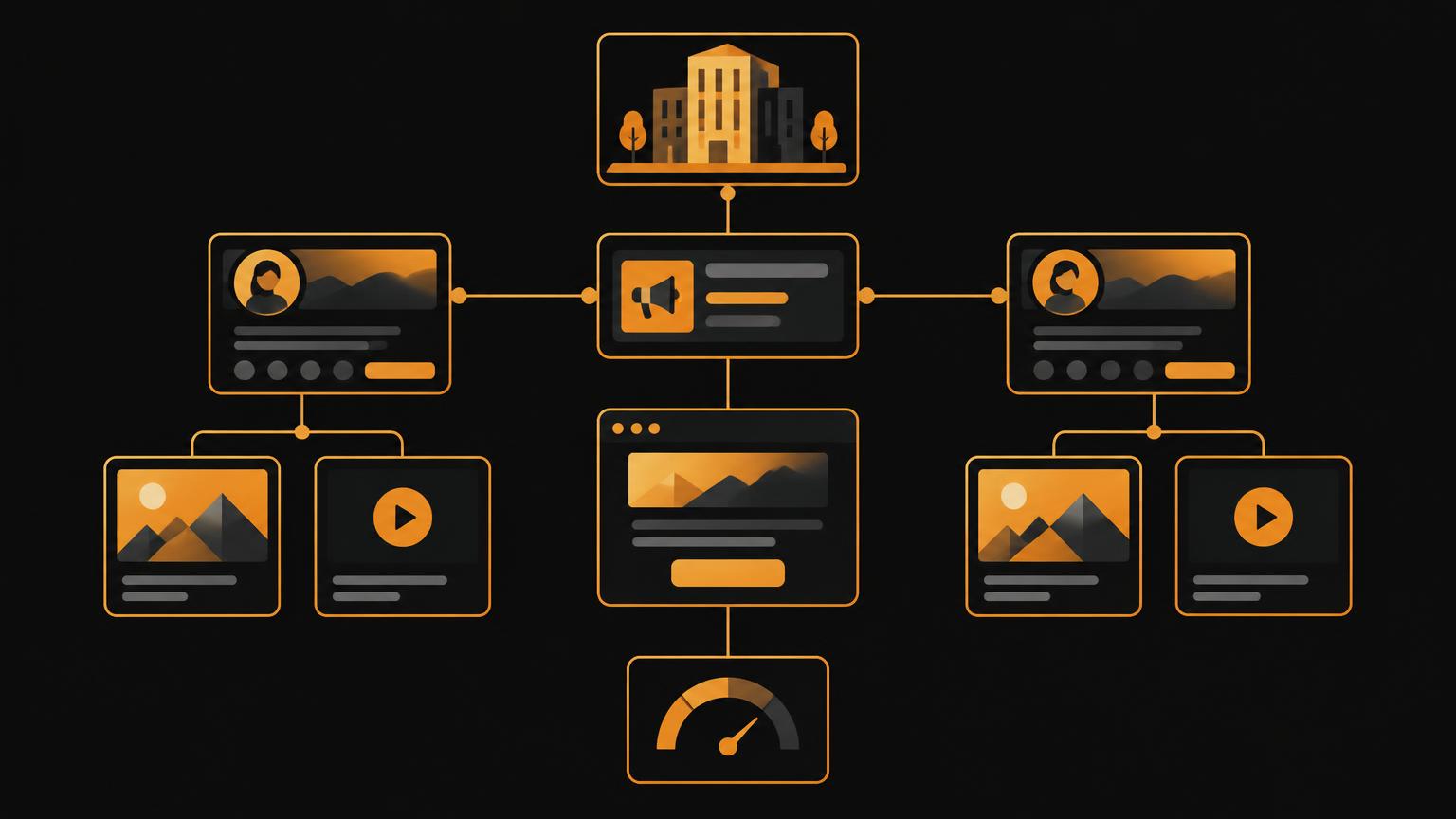
A good visual idea alone is not enough for advertising on Facebook and Instagram. Behind every campaign are a clear offer, suitable accounts, approved content and a clear journey after the click. Preparing these elements independently can easily leave gaps: the video promises something different from the landing page, or the responsible person cannot access the advertising account.
Structured preparation therefore connects business decisions with creative and technical work. This guide explains what information you should provide and which checks make sense before your first launch. It promises neither a particular reach nor enquiries or sales. The specific implementation depends on your offer, available account functions and agreed tasks.
1. From the desired outcome to a clear offer
Do not begin by asking which ad format looks best. First clarify which action matters to your business and how it can be handled in everyday operations. Do you want to build interest in an offer, enable conversations or support orders? An overarching business goal and the campaign objective selected in the platform are connected, but they are not the same thing.
Express your offer in a few clear sentences. Describe the benefit, main conditions and next step. If an offer requires consultation, the ad should not present that process as an immediate transaction. The clearer the expectation you set, the easier it is to coordinate the visual idea, copy and landing page.
Define what information is genuinely needed for a suitable enquiry. Coordinate marketing and internal handling: who answers messages, reviews enquiries and feeds back on contact quality? Without this connection, later reporting may show activity but reveal little about whether the chosen enquiry route suits the business.
2. Describe your audience and their usage context
Do not describe people solely by age or location. Focus on needs, possible objections and situations in which your offer could help. Feed advertising often reaches people who are not actively searching for your service. The context must therefore make sense without a preceding search query.
Distinguish your audience assumptions from the settings actually available. An internal description of ideal customers cannot automatically be translated into an identical platform selection. Before implementation, check available audience options, restrictions affecting the offer and current controls in the specific account. Do not promise a particular audience size or reach on this basis.
Consider which questions might remain unanswered before someone makes contact. Do they need an explanation of the process, an insight into the service or a clear definition of its scope? These questions help with content planning. If you are still deciding which channel to use, the related draft Meta Ads or Google Ads provides a neutral overview of different usage contexts.
3. Prepare business accounts and access systematically
Take stock of the Facebook Page, Instagram account, Meta business account and advertising account. These elements perform different tasks and should not be confused. Record which already exist, who manages them and whether the necessary associations are clear. Do not rush to create additional accounts before reviewing existing structures.
Clarify who represents the business organisationally and who may edit content or campaigns. Access should be limited to the relevant task. Personal passwords do not belong in shared project lists or emails. Proper permissions and secure access are part of preparation, not tasks to leave until after launch.
Before implementation, check current terminology, required account types, connections, possible verification requirements and available roles. The interface may change. Provide accurate business details, responsible contacts and necessary approvals. If ownership or access is unclear, resolve this before producing a finished campaign.
4. Plan images and videos as a distinct workstream
Gather material that genuinely shows your offer. This might include insights into a service, clear product views or a factual illustration of the process. Check usage rights and consent from people shown. Confidential documents and identifiable customer data must not accidentally appear in an image. An attractive picture does not replace content approval.
Consider different displays early. An image that works in a wide view may lose important information in a portrait placement. Keep central content clearly visible and avoid relying solely on small text to convey your message. Videos should remain understandable when people watch without sound.
Before implementation, check current format requirements, available placements and the preview of every image used. Prepare clearly distinct approaches rather than many barely distinguishable variations. The Advertising content service can support this preparation. The related draft Planning images, videos and copy explains the necessary materials and approval stages.
5. Develop copy, formats and variations together
Ad copy should do more than describe the image. It must explain why the offer matters in the situation addressed and what happens next. Write specifically, without unsubstantiated superlatives or artificial urgency. Important conditions should not emerge only after contact if they significantly affect the decision.
Plan variations around a clear question. For example, you could compare an explanatory presentation with a practical glimpse of the process. Do not randomly change the offer, image, copy and landing page all at once if you want to understand differences later. Document which assumption a variation should test and who approves its factual claims.
For approval, review the image, copy, destination and contact route together. An image approved in isolation may become misleading in context. Identify valid versions and record whether later adjustments need another review. Support with Meta Ads should explicitly describe its actual scope rather than silently assuming all creative work is included.
6. Make a considered choice between a landing page and a form
A landing page provides space to explain an offer and answer additional questions. An on-platform form can offer a different enquiry route, but is not automatically the better choice. What matters is the information people need before deciding and how the enquiry is handled afterwards. Before implementation, check currently available form functions and the processes supported in the account.
On your own landing page, the headline, imagery and offer should match the ad. Check mobile display, loading behaviour, clear input fields and confirmation after submission. Also verify that enquiries reliably reach the responsible team. Untested delivery can interrupt the entire contact journey even when the ad works technically.
Collect only information whose purpose you can explain and which the intended process requires. Clarify access, retention and internal sharing with the responsible people. The related draft Why advertising needs a suitable landing page explores content alignment. For existing pages, Website improvement can address specific unresolved obstacles in the enquiry journey.
Enquire about Meta Ads: clarify your existing foundations and the preparation required through the marketing enquiry form.
Send a non - binding enquiry7. Organise payment methods and advertising budgets separately
Before launch, clarify who handles billing and what payment details the advertising account requires. Before implementation, check available payment methods, required business details and existing restrictions. Enter payment information only through the designated secure account channels. A project discussion does not require full payment details to be sent openly.
The advertising budget goes to the platform. Strategy, account review, design, copy, technical preparation and ongoing management are separate professional services. Platform costs and advertising spend are paid directly or according to the account setup; the specific arrangement must be confirmed before the project begins. A larger budget does not guarantee a better result and replaces neither a clear offer nor suitable content.
Define who approves budget changes and how questions are handled. Also plan for internal work to source materials, approve factual content and handle contacts. Later evaluation must consider the offer, market, competition, budget, audience, ad content, landing page and measurement. Without this context, a single metric cannot provide a reliable basis for decisions.
8. Understand Meta Pixel, Conversions API and consent
The Meta Pixel is a tool for recording website events. The official Set up and install the Meta Pixel guide covers setup and installation. Nevertheless, do not begin by installing code: first ask which action should be measured and what data would be processed.
The Conversions API can enable server-side event transmission. It is not a way to bypass missing consent. Advertising tracking may be used only with appropriate consent and privacy arrangements. Before implementation, check current integration options, necessary data, technical responsibilities and the connection to consent management. Not every campaign idea automatically needs every available technical extension.
In Tracking: personality profiles can emerge from seemingly irrelevant data, the FDPIC explains how linking individual interactions can enable broader inferences. Review the entire data flow, not just visible cookies. This article provides neither legal advice nor a privacy guarantee; the relevant specialists must resolve open questions for your specific use.
Technical testing requires defined events and a traceable test process. Check granted and refused consent and possible duplicate recording of the same action. When the Pixel and server-side transmission are used together, their combination requires both substantive and technical review. Do not document unnecessary personal information in screenshots, test lists or reports.
9. Make preparations visible and approve them together
Bring unresolved issues into a shared overview. The following template shows typical foundations and responsibilities, not the state of your account. Add the actual responsible people without storing confidential access details in the overview. Distinguish content approved for factual accuracy from technically tested functions so these tasks are not accidentally treated as equivalent.
| Foundation | Why it is needed | Responsible | Check before launch |
|---|---|---|---|
| Goal and offer | Shared direction | Business | Benefit, conditions, next step |
| Accounts and roles | Organised access | Account managers | Association, permissions, security |
| Images, videos and copy | Clear advertising message | Content team and subject-matter approver | Rights, formats, valid versions |
| Landing page or form | Clear enquiry journey | Marketing and technical team | Mobile view, delivery, handling |
| Measurement and payment | Controlled implementation | Technical and billing teams | Consent, events, payment route |
Materials you should provide
- Campaign goal and clear description of the offer
- Overview of existing accounts and responsible people
- Approved images, videos, copy and usage rights
- Tested landing page or agreed form process
- Confirmation of advertising budget, payment route and service scope
- Agreed measurement plan and appropriate consent solution
- Designated approver and agreed monitoring process
The local demo asks about your goal, existing accounts, content, landing page and measurement. Its result identifies necessary preparations, not a forecast of success. It does not connect a Meta account, create a campaign or publish an ad. No inputs are stored, data sent or external interfaces called; no advertising spend is incurred. You can reset the selection.
- Campaign goal
- Target audience defined
- Facebook page
- Instagram account
- Payment method
- Images, videos and copy
- Landing page or form
- Approvals and test variants
- Meta business account
- Ad account and roles
- Meta Pixel or Conversions API
- Consent and data protection
10. Agree testing and ongoing monitoring in advance
Before launch, plan who approves publication and who checks afterwards. Review ad previews, destination addresses, contact delivery and measurement together. Missing payment approval or a broken form should not first come to light after activation. Record the approved starting position so later changes remain traceable.
Align reporting with your original goal. Impressions, clicks and submitted forms describe different stages and are not equivalent to suitable customer contacts. Supplement platform data with factual feedback on enquiry quality without unnecessarily sharing personal data. Assessment remains context-dependent and cannot guarantee future outcomes.
Agree how new variations are proposed, approved and documented. Ongoing monitoring also covers changes to the offer, unavailable content and organisational bottlenecks. Related blog destinations in this private preview are drafts, not publicly available recommendations. You can return to the beginning of the article and review preparations step by step with everyone involved.
Summary
- Goals and offers come before format selection.
- Accounts and access need clear responsibility.
- Images, videos, copy and landing pages are approved together.
- Advertising budgets and professional services remain separate.
- The Pixel and Conversions API do not replace consent.
- Tests and ongoing monitoring belong in launch planning.
Frequently asked questions
Do I need to produce new images first?
First assess existing materials for relevance, rights and suitable presentation. Only then can you identify which content is genuinely missing.
Do I need a new advertising account for every offer?
Not automatically. Existing accounts and responsibilities should be reviewed before expansion. Which structure is sensible and available must be clarified case by case.
Is an on - platform form always easier?
It can provide a different enquiry route, but does not replace planning the questions and handling process. Availability, privacy information and delivery must be checked before implementation.
Does the Conversions API bypass refused consent?
No, it does not replace consent. Advertising tracking may be used only with appropriate consent and privacy arrangements.
Who pays for ad delivery?
The advertising budget goes to the platform. The payment route and account setup are confirmed before the project begins, while preparation and management remain separate services.
When is the campaign fully prepared?
When substantive approvals, account access, ad content, contact routes and planned technical checks have been clarified. This establishes an orderly starting point, but does not guarantee reach, enquiries or sales.
Sources
- Set up and install the Meta Pixel | Meta Business Help CentreMeta · checked on 2026 - 11 - 05
- Tracking - personality profiles can emerge from seemingly irrelevant data FDPIC · checked on 2026 - 11 - 05
Back to the top of the article